Category Archives: Assessment

Drop Everything and Write! and Bingo

Do you ever feel like there is not enough time to teach writing during a busy school day? I know that feeling! In this blog post, I want to share with you one way I squeeze in a little writing time.
My students build their writing muscles by using the strategy of writing for 10 uninterrupted minutes. This is known as our Drop Everything and Write! for 10 uninterrupted minutes sessions. This strategy can be used when there is not enough time to start a new lesson, but you want your students to be engaged in a meaningful activity.  Plus, no special or extra preparation is needed.

I have created a Drop Everything and Write and Bingo resource that can be used to support you as you implement this strategy in your classroom. It is in available in my Teachers Pay Teachers store. www.teacherspayteachers.com/Store/Our-Writing-Space

The Strategy

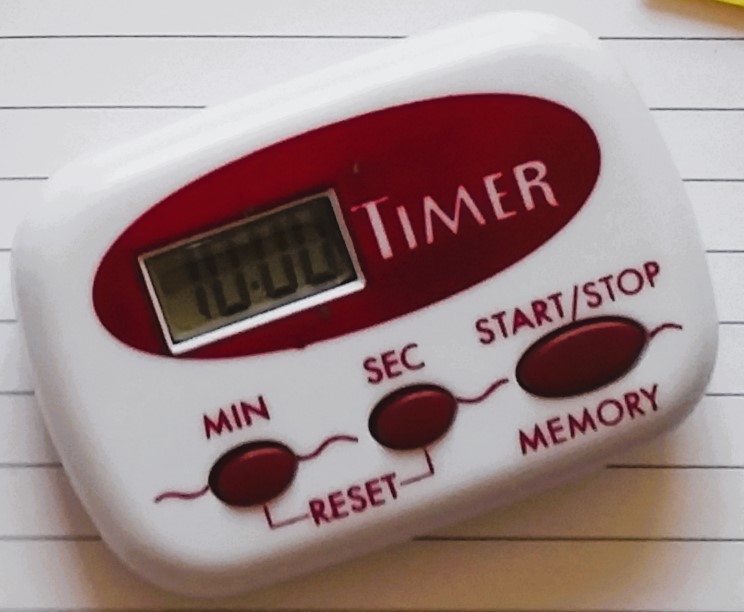
Drop Everything and Write! for 10 uninterrupted minutes. A timer is set for 10 minutes. During this time, students and teacher write for the entire time. No one is allowed to talk or do something else. Everyone is engaged in writing! The power of this strategy is that everyone is actively engaged in writing at the same time, for a short time, and it is a daily habit.

Two Writing Bingos

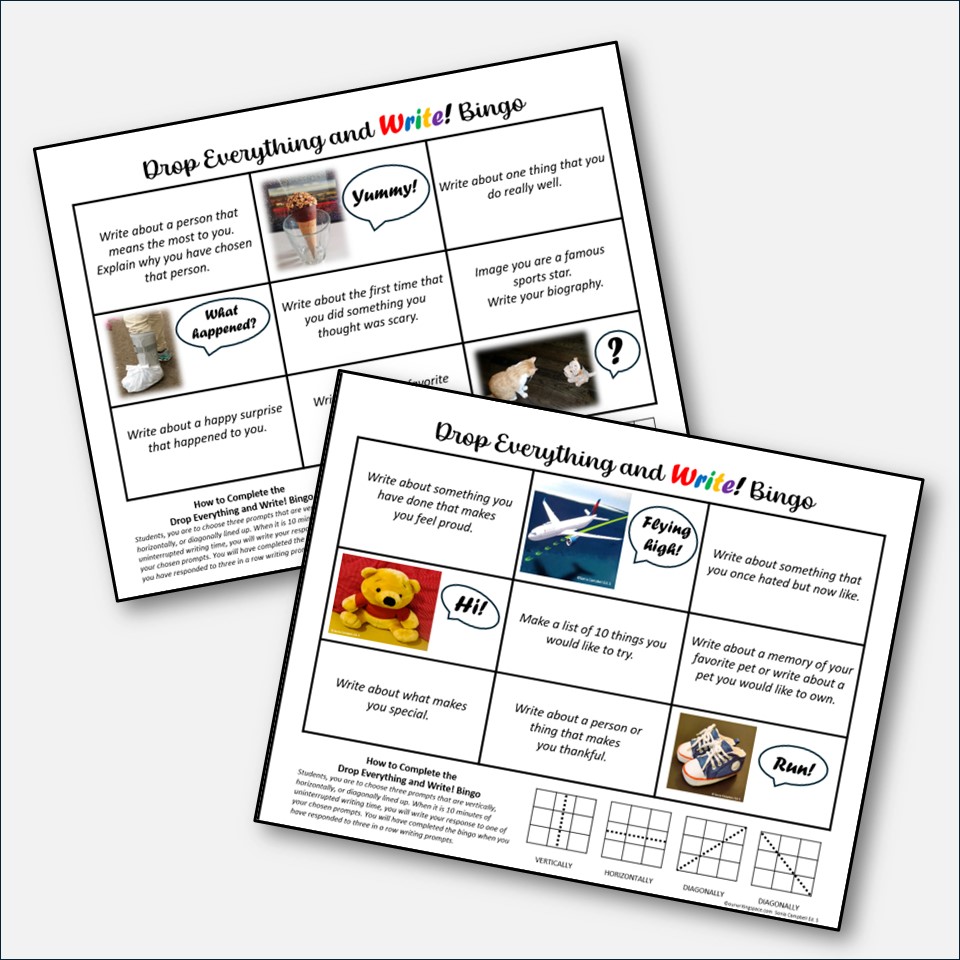
Included in the resource are two Drop Everything and Write! Bingos that can be used to get students’ writing juices flowing and help to warm-up their writing muscles. There are different writing prompts to help them get started with their writing but eventually they will move into writing self-selected topics.
Benefits of This Strategy

Students are writing for a short amount of time.

It is a non-threatening writing activity that can help to

overcome (for some students) the dread of writing.

It helps students to build writing muscles.

It helps to build writing confidence.

Next Steps

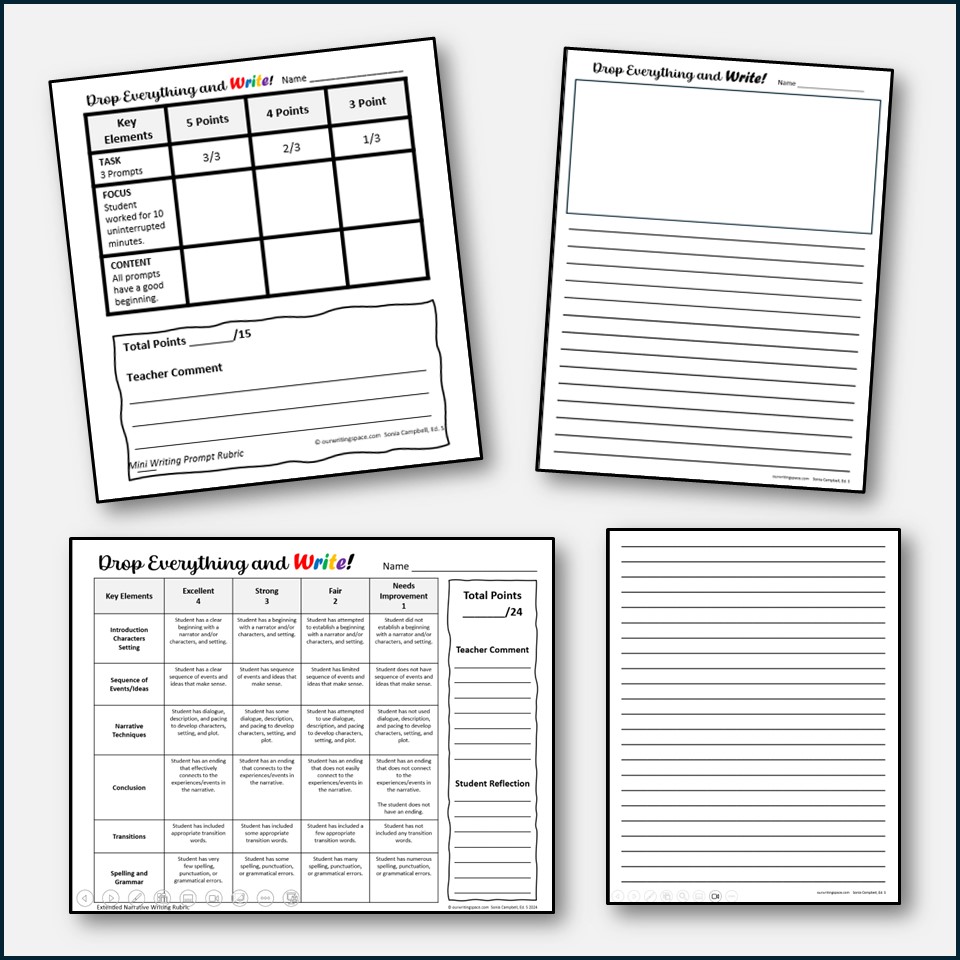
After students have completed one of the writing bingos, it can be graded using a  mini writing prompts rubric. Students will not have done any in depth writing, but hopefully, have been inspired to keep writing. The rubric can indicate to the students that they are on the right track with their writing ideas. By using the rubric, you  will be able to monitor how much students are participating when they Drop Everything and Write! for 10 uninterrupted minutes.

The brief writing done in the 10 minutes can lead into the main writing session. Students can take one of the ideas they started in Drop Everything and Write! and develop it in the writing workshop time, during center activities, or during independent writing time. This extended writing can be taken through the writing process by the students. The finished writing can be graded using an extended narrative writing rubric.
What Will You Find In This Resource?

2 Writing Bingos

2 Book Covers (color/black and white)

5 Drop Everything and Write! Mini Posters (Color/ Black and White)

9 Writing Pages

1 Mini Writing Rubric

1 Extended Narrative Writing Rubric

Detailed Teacher Instructions

For more information about how I encourage my student to write for ten uninterrupted minutes, please read the blog post, Building Elementary Writing Muscles.

Happy Writing!

Sonia
Assessing Writers and The Writing Process

The start of the school year is full of assessments. We want to know where our students are as learners. In writing, I give a benchmark writing assessment to all my students. I do not grade this work as the purpose is to assess where students are in their writing at the beginning of the year. I like to do this close to the end of the first week of school or in the second week. I use this time frame because I want to give my students a little time to get over their nerves of being in a new environment and to become comfortable with me, their new teacher.

For the benchmark writing, students write a narrative piece. It can be a real or imagined piece of writing. In a self-contained classroom setting, I have given this assessment over three days. That sounds like a long time for a writing assessment! The reason I like to do this is to see how students tackle the writing process. As we will be using the writing process throughout the year, at the very start I want to see how much they understand it.

Each day, students will have 1 hour for their writing. This is not teaching time, but it will provide me with ideas for writing minilessons. This is my time to observe and take notes about how my students are tackling their writing, their understanding of the writing process, and how they write independently at the start of the school year. I do not interrupt them while they are working, and I do not take questions that will provide answers that will tell them how to do their writing. I want to see what they can do! My long-term goal is for each student to become an independent writer. While the students are working, I walk around the room and write brief notes about each student. I have specific questions in my mind as I make my observations.  Here are some sample questions.

Day 1 – Prewriting and Drafting

Prewriting – Do some students brainstorm? Do some students create some sort of writing plan? Do any students go straight into drafting?

Drafting – Is there anyone who is taking a long time to get started? Who is not using their prewriting notes? Who is writing quickly? Who is writing slowly? Is there anyone who seems to be focusing more on neat handwriting instead of their story? Is there anyone who has finished well within the time?  Is there anyone who seems to be erasing every other word and making very little progress in their writing?

Day 2 – Revising and Editing

Revising – Who seems to understand what it means to revise? Do many students seem to be adding, crossing things out, and making changes?  Are some students continuing to write their story?  Are some students writing a final copy of their work instead of revising?

Editing – How are they editing? Is anyone checking grammar, spelling, and punctuation? Is anyone ignoring this step?

Day 3 – Publishing

For this writing assessment, all I require for publishing is for students to write a polished version of their story.

After the assessment, I carefully read each student’s work with my notes in hand. From their work and my notes, I can learn how much they understand about the writing process, I can create a list of minilessons based on the needs that I have found in their writing and my observations, and I can create flexible writing groups.

Not enough time?

It is not always possible to dedicate 3 days to an assessment, so I do a shorter version. This also applies if I realize that I have students who do not have any writing stamina and they really do not understand the writing process.  I modify the full-length assessment to only focusing on prewriting and drafting. When I do this, I keep the same questions in mind. Usually, I can gather some information about their grammar, spelling, and punctuation learning needs from their short writing.

My Follow Up!

At the end of the school year, I give a final benchmark writing assessment. As the students will have had writing instruction throughout the school year, I will grade this work. Next, I return the first benchmark writing assessment and the final one to my students so they can see their growth. They are often wowed by their growth because they have the evidence in their hands. It is wonderful to see their excitement! Go ahead and try this and anticipate the smiles you will see at the end of the school year.

Happy Assessing!

Sonia