Category Archives: Read Alouds

Recommended Reads

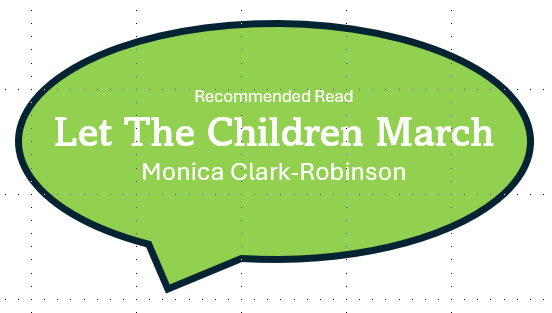
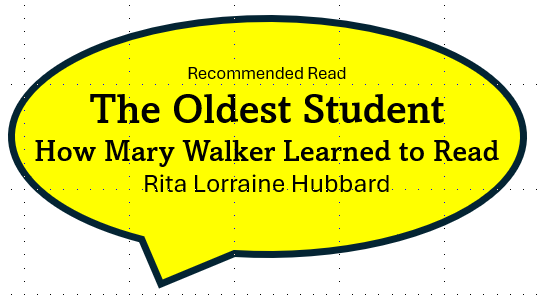
Three books that I have enjoyed reading are Pies from Nowhere: How Georgia Gilmore Sustained the Montgomery Bus Boycott by Dee Romito, Let the Children March by Monica Clark-Robinson, and The Oldest Student: How Mary Walker Learned to Read by Rita Lorraine Hubbard. These stories bring out the strength, determination, and perseverance of different individuals and groups.

If you are interested in learning more about the individuals in the stories, I have included links to the books being read online and videos.

I hope your students enjoy learning about Georgia Gilmore, the Birmingham Children, and Mary Walker!

Pies From Nowhere: How Georgia Gilmore Sustained the Montgomery Bus Boycott

This is an interesting story as we learn about an individual and her team who worked behind the scenes to support the Montgomery bus boycott that started in 1955. Georgia Gilmore and the Club of Nowhere cooked and baked food to raise money to support the action. She was fired from her job when they found out she was a part of the boycott.  Martin Luther King, Jr. encouraged her to start her own cooking business. The business took off and many people went to her house for meals. In addition to this, her home became a meeting place for civil rights leaders. When the boycott was over, Georgia Gilmore kept on cooking as there was more work still to be done.

Read Aloud https://www.youtube.com/watch?v=ZFOf2Tp_jl8&t=10s

Interview with Georgia Gilmore https://www.youtube.com/watch?v=FV-JnFRmsOY&t=26s

Let the Children March is about the Birmingham Children’s Crusade, that took place in Alabama, May 2 – 10, 1963. As Black parents were fearful of losing their jobs, their children decided to march in their place. It was a nonviolent protest that was led by Black children against segregation. The violent ways they were treated by the police was captured by news photographers and television crews. The country and the world were horrified by what they saw. Not long after this exposure, the white city officials and Black civil rights leaders reached an agreement. The actions of the children played an important role in ending legal segregation.

Book Read Aloud https://www.youtube.com/watch?v=GbSyjMtFt0k

Children’s Crusade of 1963 https://www.youtube.com/watch?v=WV0k-3Hkjsw

Britannica Article https://www.britannica.com/event/Birmingham-Childrens-Crusade

The Oldest Student: How Mary Walker Learned to Read by Rita Lorraine Hubbard

In 1848, Mary Walker was born into slavery. She did not learn how to read until she was 116 years old. She was certified as the nation’s oldest student and was twice named Chattanooga’s Ambassador of Goodwill. She died when she was 121 years old.

Read Aloud https://www.youtube.com/watch?v=fDdBZAvWreo

Video https://www.youtube.com/watch?v=hSKXf1HB9n8

A Fun Valentine’s Day Activity

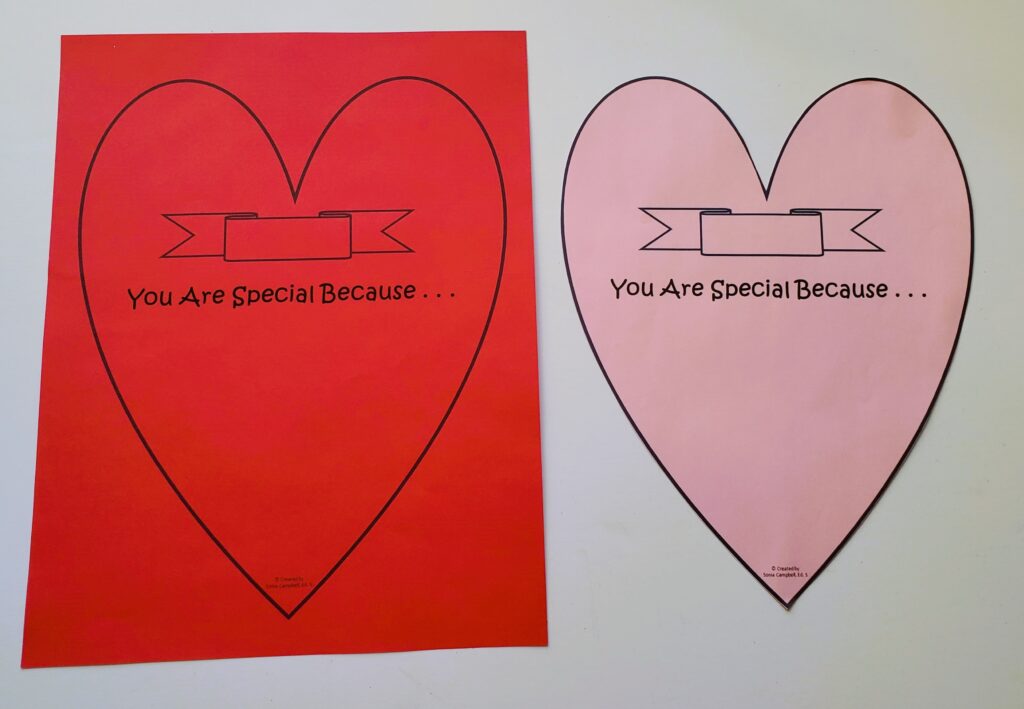
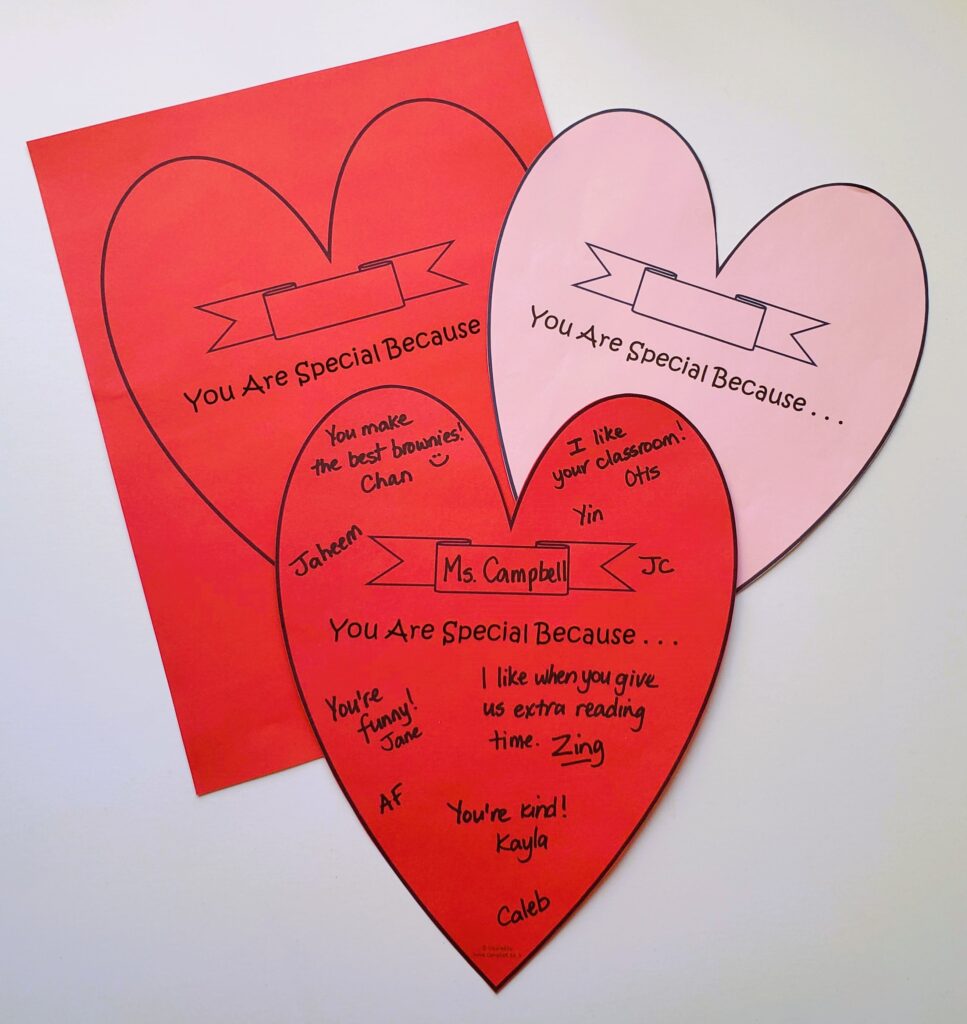
This Valentine’s Day activity is an opportunity for students to tell each other how they are special.  At the end of the activity, each student will have a You Are Special Because  . . . heart that has been signed by their classmates with comments about what makes them special.

  • All students can take part in this activity. It would be nice for all students to have Valentine’s Day treats to share, but that may not be possible. The teacher could provide additional treats.

Preparation Before the Activity

You Are Special Because . . . template.

Print and cut out a class set of You Are Special Because . . . heart. (The free heart PDF is below.)

The cut-out hearts are taped on to students’ desks/tables and the teacher’s desk.

It is suggested that the teacher prepares a small treat for each student.


A Read Aloud Before the Activity

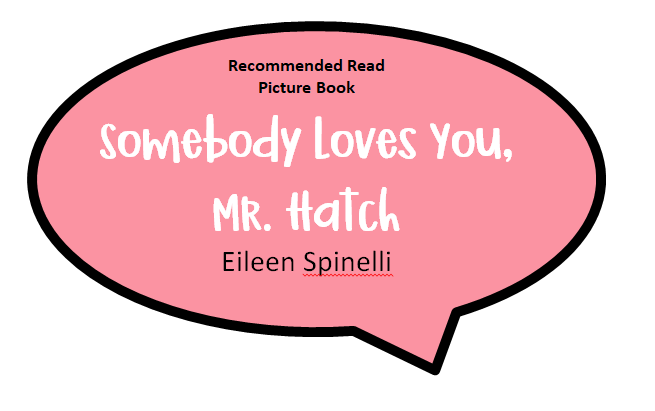
I recommend reading Somebody Loves You, Mr. Hatch by Eileen Spinelli to the class to get students thinking about how we can make each other feel special and why this is important. Here are some questions that can be shared with the students before the reading. The questions will help them focus in on the text.

1. How is Mr. Hatch at the beginning of the story? (Mr. Hatch is lonely.)

2. What happens to make him share chocolates from the heart-shaped box? (Mr. Hatch gets a heart-shaped box that has a card that says, “Somebody loves you.” He laughs, dances, and claps his hands. He is happy.)

3. How does Mr. Hatch help Mr. Smith and Mr. Todd? (Mr. Hatch watches Mr. Smith’s stand so that he can go to the doctor. Mr. Hatch looks for Mr. Todd’s little girl.)

4. What causes Mr. Hatch to go back to being alone? (Mr. Hatch finds out that the Valentine’s heart-shaped box and note was not meant for him.)

5. How does everyone react? (Everyone gathers outside Mr. Hatch’s house to show that “Everyone loves Mr. Hatch.”)

Class Discussion

How does Mr. Hatch change from the beginning to the end of the story?

In the beginning, Mr. Hatch is very lonely. When he receives a heart-shaped box with a note that says, “Somebody loves you.” He becomes friendly to everyone. When he finds out that the box was delivered to the wrong address, he goes back to being alone. However, in the end, everyone shows him that he is loved and that he is special. He embraces their love.

If you are not able to get a hard copy of Somebody Loves You, Mr. Hatch, you can access it at Storyline Online https://storylineonline.net/books/somebody-loves-you-mr-hatch/

Next, have a specific time for students to pass out their Valentine’s Day treats.

Example of how the You Are Special Because . . . template can be filled in.

Directions to students

  • Students are to write a nice comment about why they think that student is special.
  • If a student cannot think of something to say but wants the person to know that they are thinking about them, they can just write their name or initials.
  • If a student cannot think of anything nice to say, they are to leave the heart blank and move on to the next heart.
  • Students and teacher will walk around the room signing hearts and leaving treats on desks/tables.
  • After the alloted time, students and teacher will sit down to enjoy their treats and read their hearts!

Hopefully, this activity will leave all students and teachers feeling very special!

Happy Valentine’s Day,

Sonia

P.S. Here is the free download for the You Are Special Because . . . template.

Recommended Read Aloud Picture Book for MLK Day

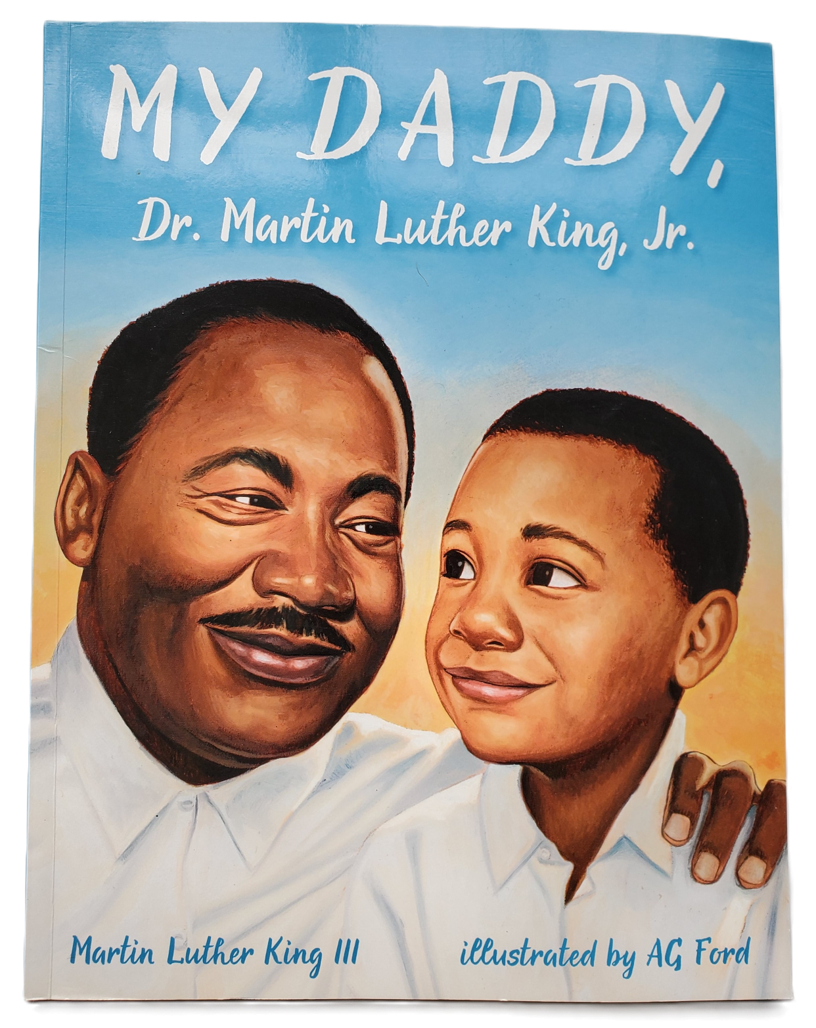
My Daddy, Dr. Martin Luther King, Jr. by Martin Luther King lll

This picture book narrative is told from the perspective of Martin Luther King, Jr.’s eldest son, Martin Luther King lll. He says, “There have been a lot of books written about my father. But not a whole lot has been written about my dad.” He reflects on the father side of his well-known father. He shares their father and son relationship, and how he felt about his father’s work. Martin Luther King, Jr. died when he was 10 years old.

I think this a great read aloud to share with students in grades 3-5 as it is an opportunity for them to learn about Martin Luther King, Jr from a child’s perspective, his son, Martin Luther King lll. Most likely, students will already have some knowledge about Martin Luther King, Jr. and the work that he did. Usually, they will have heard the information from an adult’s point of view.

Class Discussion

After reading the text, ask students to share any new information that they learned about Martin Luther King, Jr. For example, the kind of games he played with his son, he was not a tall man, and he had the boys burn the toy guns they had received as Christmas presents.

Martin Luther King lll and his sister, “complained” to their parents that they didn’t want to go to the new school.

Can you think of a time when you had to go to a new school? How did you feel? Why?

If you were Martin Luther King lll and his sister having to go to their new school, how would you feel? Why?

I prefer to have a hard copy of the book to share with my students. That way I can use post-its to pinpoint discussion points. If you are unable to get a copy here is a link https://youtu.be/msrEu5tOGMA to the book being read online.

Happy MLK Day,

Sonia

6 Read Alouds for Personal Narratives

At the beginning of the school year, I like my students to write personal narratives because I think this genre helps them to build their writing confidence as soon as we start talking about writing.  I tell my students that a personal narrative is a story that has happened to them. They are writing about things they already know!

Read alouds are one way to create discussions around personal narratives. They can be used to spark writing ideas that students can brainstorm in their writer’s notebooks, and students can make personal connections to the experiences of the characters and situations.  For example, after reading Wilfrid Gordon McDonald Partridge, students can discuss their own memories. They can write about the ones that mean the most to them.

Here are 6 read aloud suggestions that can help you get started with your read aloud collection.

Wilfrid Gordon McDonald Partridge by Mem Fox

A small boy lives next door to an old people’s home.  Miss Nancy is his favorite person to visit at the home. He learns that she has lost her memory. He asks the people in the home, “What’s a memory?’ and gets lots of examples of things that make memories. He sets about to gather memories for Miss. Nancy. When he gives her his box of memories, Miss Nancy finds her memories.


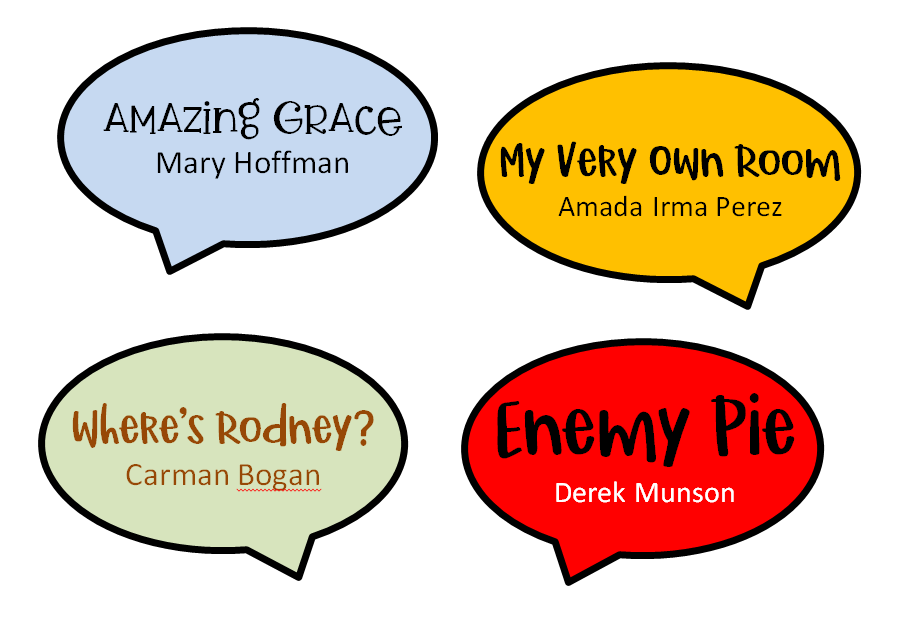
My Very Own Room by Amanda Irma Perez

The author shares her experience of growing up in tiny, two bedroom house with a large family. In the story, she is almost nine years old and shares a room with her five little brothers. They often have visitors that make the house even more crowded. She longs for a room of her own where she can read, write and dream, but their house is too small. She spies a tiny closet and with her family she turns it into tiny bedroom just for her.

This story is told in English and Spanish.

Questions: Can students think of a time they really wanted something? Did they get it? How did it happen?     

Amazing Grace by Mary Hoffman

Grace loves stories and acting them out. She wants to play Peter Pan in the school play. One classmate thinks she cannot be Peter Pan because she is a girl. Another tells her that she cannot be Peter Pan because she is black.  Her family helps her overcome these opinions and she realizes that she can be anything that she wants. She auditions for the play and gets the part she desires.

Questions: Can students think of a time they were told they could not do something? How did they feel? Did they give up or did they persevere? How did things turn out?

Where’s Rodney? by Carmen Bogan

Rodney is easily distracted when he is in the classroom because he loves to be outside. The class is to go on a field trip but Rodney is not excited because he thinks he knows all about parks. In his experience, they are no big deal! When they go on the field trip Rodney is in for a big surprise. He is able to experience the outside like never before.

Questions: Can students think of a time when they were surprised by something they thought they knew all about? What happened?

Enemy Pie by Derek Munson

The main character has only one enemy, Jeremy Ross, and he wants to get rid of him. His dad tells him the fastest way for that to happen is for Jeremy to eat enemy pie. His dad offers to make the pie but for it to be successful, the two boys must spend the day together. The plan is put into action, but there is an unexpected outcome.

Questions: Can students think of a time of an unexpected friendship they made? What happened?

My Name is Sangoel by Karen Lynn Williams

Eight-year-old Sangoel is from Sudan. He is a refugee. He leaves the refugee camp with his mother and little sister for America. His name is very important to him because it is the name of his ancestors. In America, he learns the American way of life. Each time his name is said, it is mispronounced by everyone he meets, he quietly corrects them, but it continues. He begins to feel that he is losing his name and his identity. Then he gets an idea to help people understand how to say his name. His idea works.

Questions: Can any of your students identify with people either saying or spelling their name incorrectly? Do they correct them or do they just accept their pronunciation?  How do they feel about their name? Do they know the history of their name? Is their name connected to another person?

After hearing and discussing a specific reading aloud, students can spend a short time writing down their response to the reading in their writer’s notebook. They can develop these short responses at a later date.

Online Read Alouds

If you are unable to find a physical copy of the suggested read alouds, many of them can be found online. When choosing an online reading, select one that supports the way you want the story read and nothing is distracting from the reading. For example, I prefer online read alouds that show just the pictures and the text in the frame and you only hear the voice of the reader. I think Storyline Online does this very well! https://storylineonline.net/ Don’t forget to pause the story in the places you want students to have a thought about the text.

The primary focus at this point in the year is to have students learn how they can generate writing ideas for personal narratives. As the year goes on, these same read alouds can be referred to in discussions around story elements: characters, setting, plot, problem, solution, theme, and change. The constants reference to story elements will help students understand that these should be found in all stories including the ones they write.

Happy Reading!

Sonia