Tag Archives: The Writing Process

Drop Everything and Write! and Bingo

Do you ever feel like there is not enough time to teach writing during a busy school day? I know that feeling! In this blog post, I want to share with you one way I squeeze in a little writing time.
My students build their writing muscles by using the strategy of writing for 10 uninterrupted minutes. This is known as our Drop Everything and Write! for 10 uninterrupted minutes sessions. This strategy can be used when there is not enough time to start a new lesson, but you want your students to be engaged in a meaningful activity.  Plus, no special or extra preparation is needed.

I have created a Drop Everything and Write and Bingo resource that can be used to support you as you implement this strategy in your classroom. It is in available in my Teachers Pay Teachers store. www.teacherspayteachers.com/Store/Our-Writing-Space

The Strategy

Drop Everything and Write! for 10 uninterrupted minutes. A timer is set for 10 minutes. During this time, students and teacher write for the entire time. No one is allowed to talk or do something else. Everyone is engaged in writing! The power of this strategy is that everyone is actively engaged in writing at the same time, for a short time, and it is a daily habit.

Two Writing Bingos

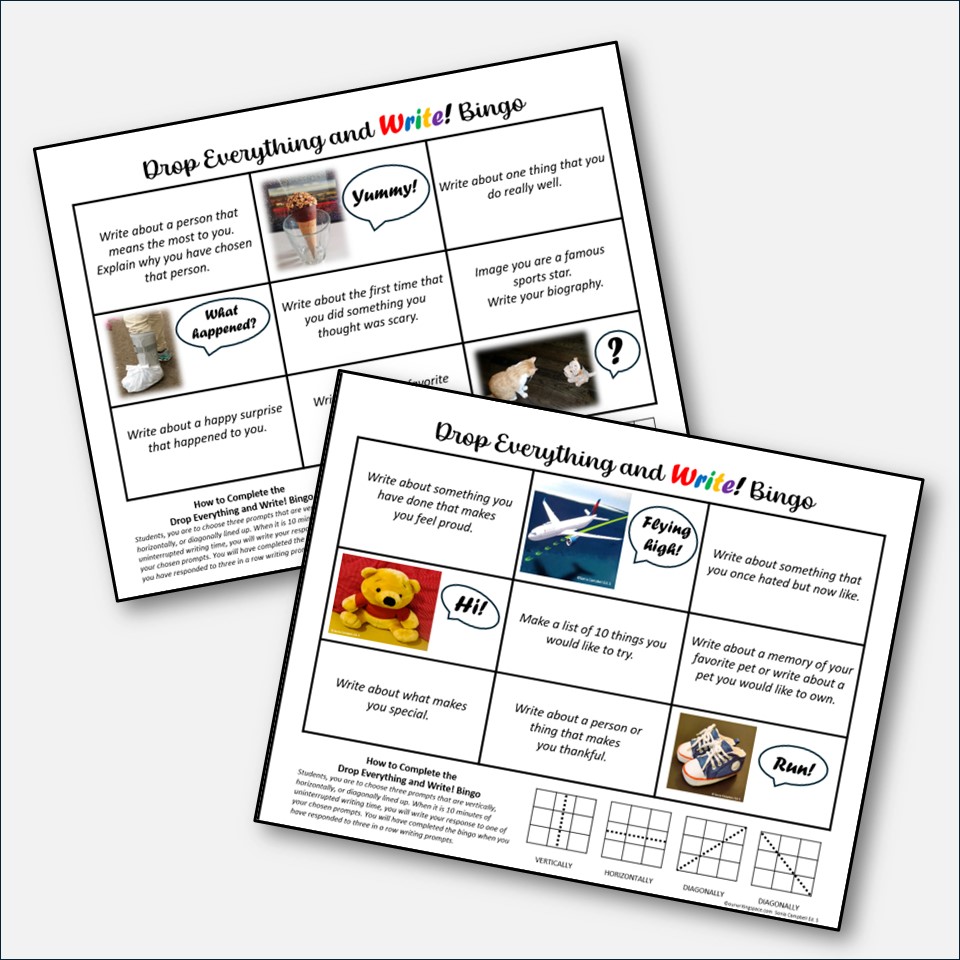
Included in the resource are two Drop Everything and Write! Bingos that can be used to get students’ writing juices flowing and help to warm-up their writing muscles. There are different writing prompts to help them get started with their writing but eventually they will move into writing self-selected topics.
Benefits of This Strategy

Students are writing for a short amount of time.

It is a non-threatening writing activity that can help to

overcome (for some students) the dread of writing.

It helps students to build writing muscles.

It helps to build writing confidence.

Next Steps

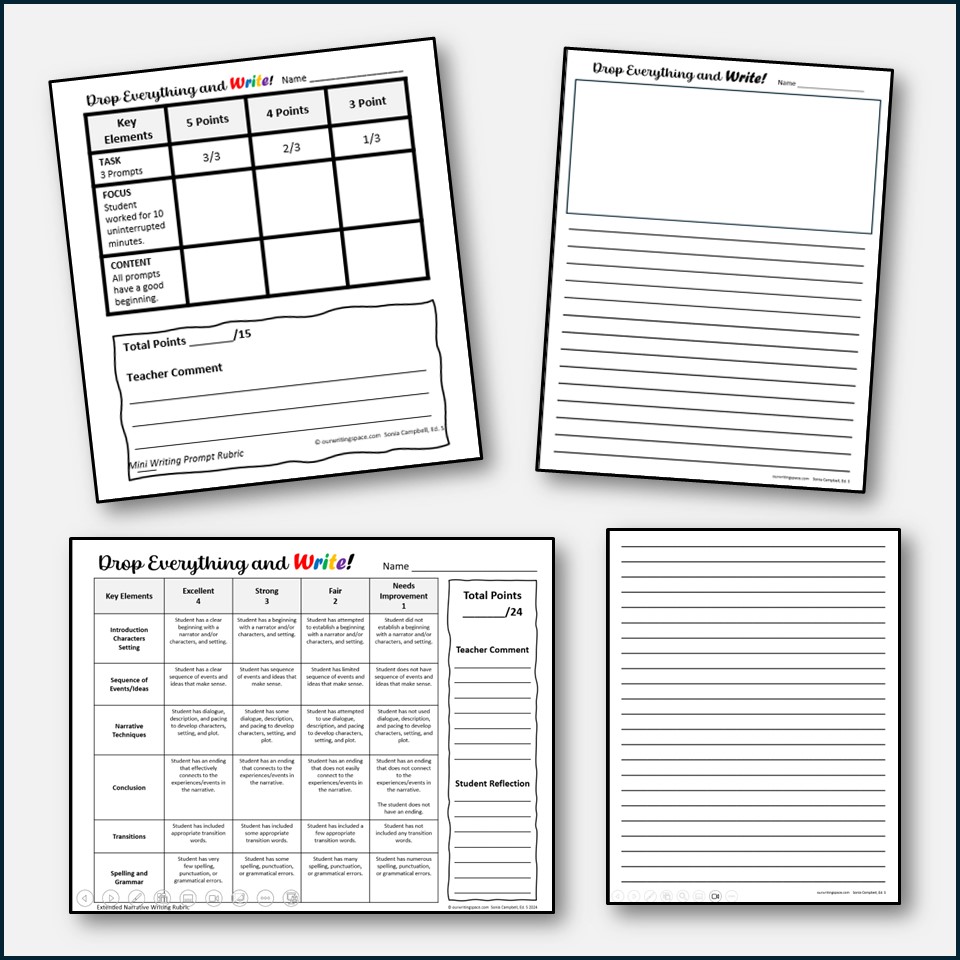
After students have completed one of the writing bingos, it can be graded using a  mini writing prompts rubric. Students will not have done any in depth writing, but hopefully, have been inspired to keep writing. The rubric can indicate to the students that they are on the right track with their writing ideas. By using the rubric, you  will be able to monitor how much students are participating when they Drop Everything and Write! for 10 uninterrupted minutes.

The brief writing done in the 10 minutes can lead into the main writing session. Students can take one of the ideas they started in Drop Everything and Write! and develop it in the writing workshop time, during center activities, or during independent writing time. This extended writing can be taken through the writing process by the students. The finished writing can be graded using an extended narrative writing rubric.
What Will You Find In This Resource?

2 Writing Bingos

2 Book Covers (color/black and white)

5 Drop Everything and Write! Mini Posters (Color/ Black and White)

9 Writing Pages

1 Mini Writing Rubric

1 Extended Narrative Writing Rubric

Detailed Teacher Instructions

For more information about how I encourage my student to write for ten uninterrupted minutes, please read the blog post, Building Elementary Writing Muscles.

Happy Writing!

Sonia
Generating Writing Ideas

“I don’t know what to write!” is something that I have heard countless students say when they have been told that they could write on any topic of their choice. Some students would jump straight in with ideas flowing, while others sit not knowing where to start. Their uncertainty led me to think about ways students could be taught to generate their own writing ideas. Here are three strategies that I have found effective, and students have found engaging.

Strategy One

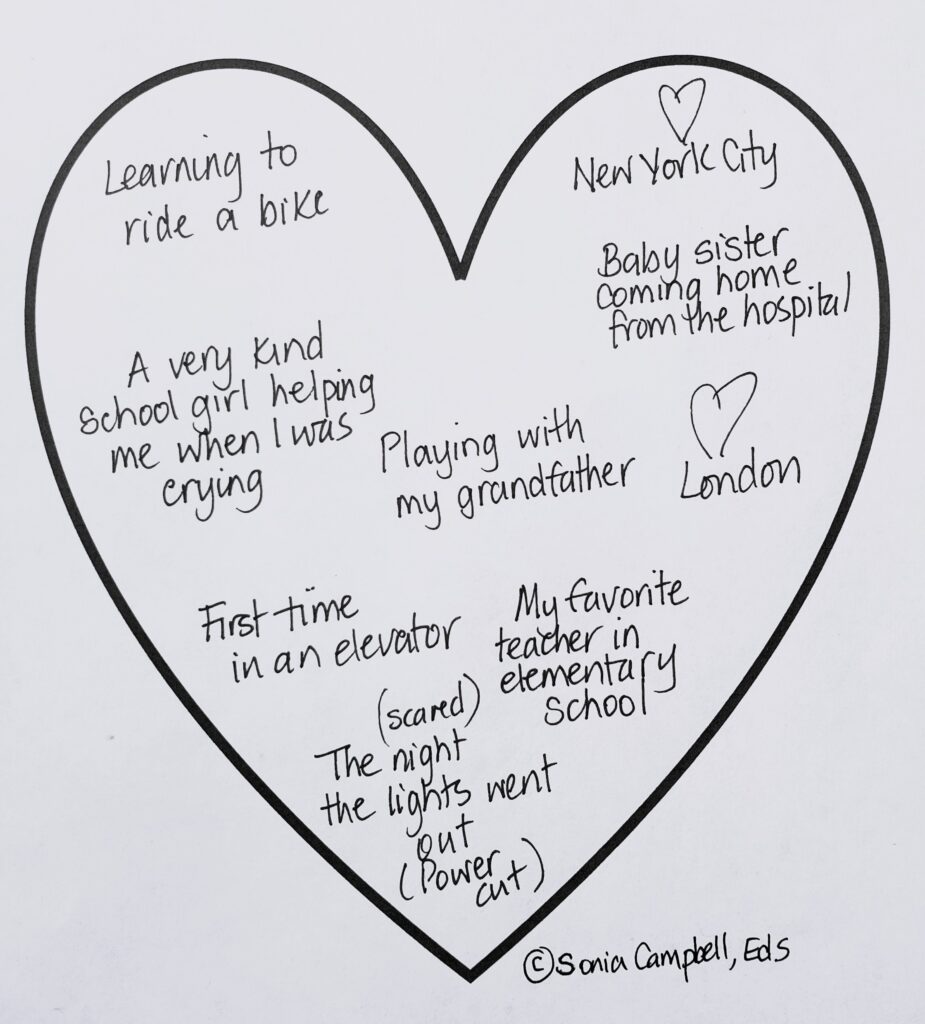
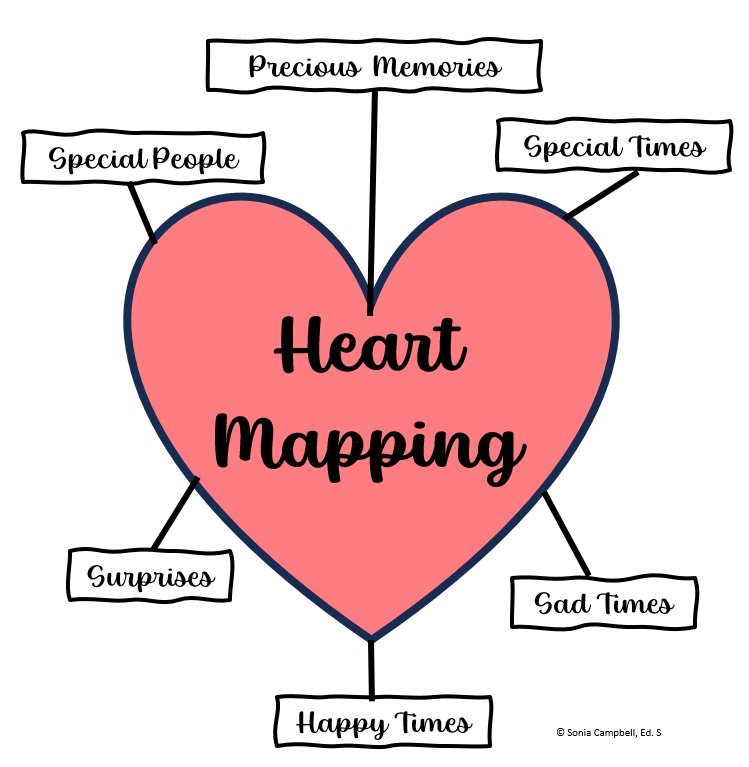
The heart mapping strategy shared by Georgia Heard in her book, Awakening the Heart: Exploring Poetry in Elementary and Middle School, is effective not just for generating ideas for poetry writing but also other types of writing.

Activity

Students draw the outline of a large heart in their notebooks, or they could be given a printed version to glue into their notebooks. In the center of the heart, students, in a few words or phrases, jot down their special memories, special people, and special events that mean the most to them.

Strategy Two

For this strategy, students create a running list of very broad writing ideas at the back of their writer’s notebooks.

Activity (Possible list ideas.)

Places they have visited.

Things they like to do.

Things they do very well.

First time they did something.

Accomplishments

Favorite foods

Favorite movies

Favorite sport stars

Favorite books

Strategy Three

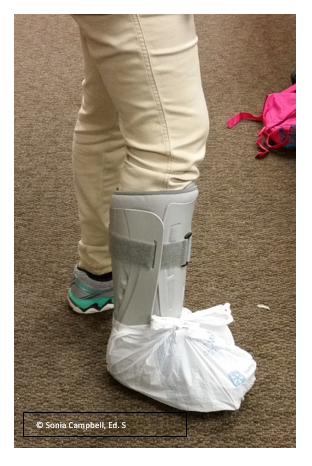
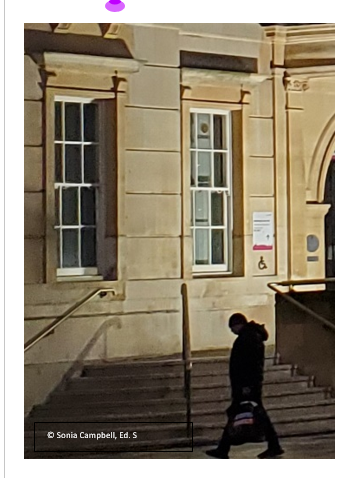
This strategy is centered around visual prompts.

Activity

Students collect photos and pictures from various sources, e.g., magazines, the internet, etc. They are then glued into their writer’s notebooks. Students will collect the images that they find interesting. As they look at their images, they can create stories related to them. For example, they could imagine what happened before the picture was taken, what is happening in the picture, and what happened after the picture was taken. They can use their imagination to create characters and stories around the images.

Students now have a bank of possible writing ideas, and they have a starting point for when they are able to choose their own writing topics. They can add to the strategies throughout the school year.

Happy Writing!

The Writing Process

I have found that it is helpful to introduce the writing process to students at the start of the school year and/or before we jump into focused writing. When I do this it helps the students become familiar with the writing process vocabulary, see the big picture of how we will approach writing, and understand the writing process is a guide to help us tackle our writing.

Prewriting

Before students can begin writing they need to have something to write about. This step is intended to help them find an interesting topic through brainstorming, freewriting, generating ideas, listing ideas, talking to others, etc. Students are more likely to take ownership of their writing when they have chosen their own topics.

Drafting

Once an idea has been chosen, I suggest that the first draft be written in their writer’s notebooks. I remind my students that a writer’s notebook is a place to hold their thinking. The first draft will not be and should not be perfect. It will be a skeleton of an idea that needs to be developed. At this stage, students should aim to have a beginning, middle and end to their writing as this will make a peer conference much more productive. Once the writer has a draft it is time to get feedback from a listener/reader. This is a peer conference time. Students may meet as often as they need to, but the meetings should not take over their writing time, and the meeting must help the writer. If this is not carefully structured students will see this as a time to socialize. I suggest that they meet a maximum of ten minutes and then return to their writing spot. The teacher will also be involved in teacher/student conferences.

Revising

This is the step that students enjoy the least because it requires them going back and taking a very close look at the work they have done so far. Often young writers think that writing is done in one take and they want to jump to publishing. Before publishing, they need to ask themselves some revising questions. For example, Did I write about one idea? Do I need to move sentences/paragraphs around? Do I need to add more details? Do I need to delete parts? Does my writing make sense as a whole? If they have had peer or teacher conferences, they should have a few ideas as to how they can move forward in their writing.

Editing

This is the time for students to focus on checking grammar, punctuation, and spelling. Students can work on their own or with a partner to check their work. For an effective peer conference, you need to give clear guidelines and model expectations. An editing checklist will help to guide conferences and students working independently.

Publishing

For the final step students will publish their writing in an appropriate format. The format will depend on the genre.

Finally, keep in mind that the writing process steps can involve revisiting some steps more than once. As students work through the process, they will see that there are times when they want to revisit a step to make their writing stronger. For example, while students are editing, they might recognize that there is something that they want to go back and revise. This is a normal part of being a writer and I think it shows that the student is placing value on clearly communicating their writing idea.

Keep it going!

Once you have shared the writing process steps with the students be sure to have them on display so your students can refer to them throughout the school year.

Happy Writing!

Sonia

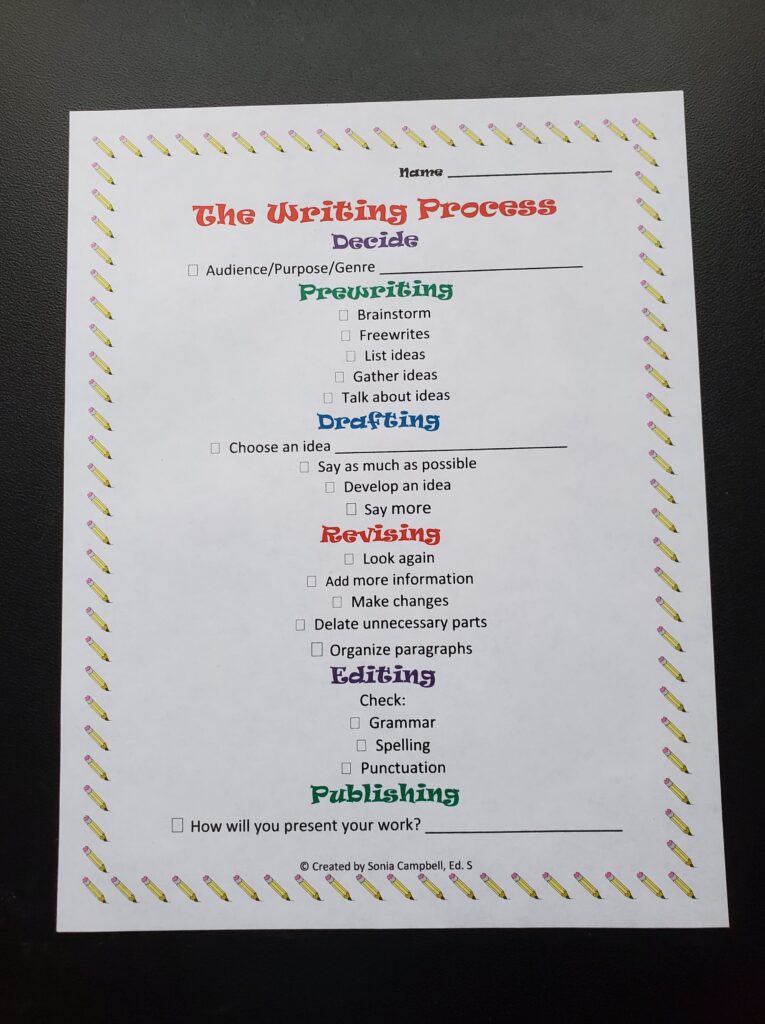
P.S. Below are free downloads of a mini poster of The Writing Process and a Writing Process Checklist that can be used in your classroom. Students can check off and fiil in the blanks on the checklist to help them stay focused and on target as they write.